
Ecumenical gathering prays for abolition of death penalty
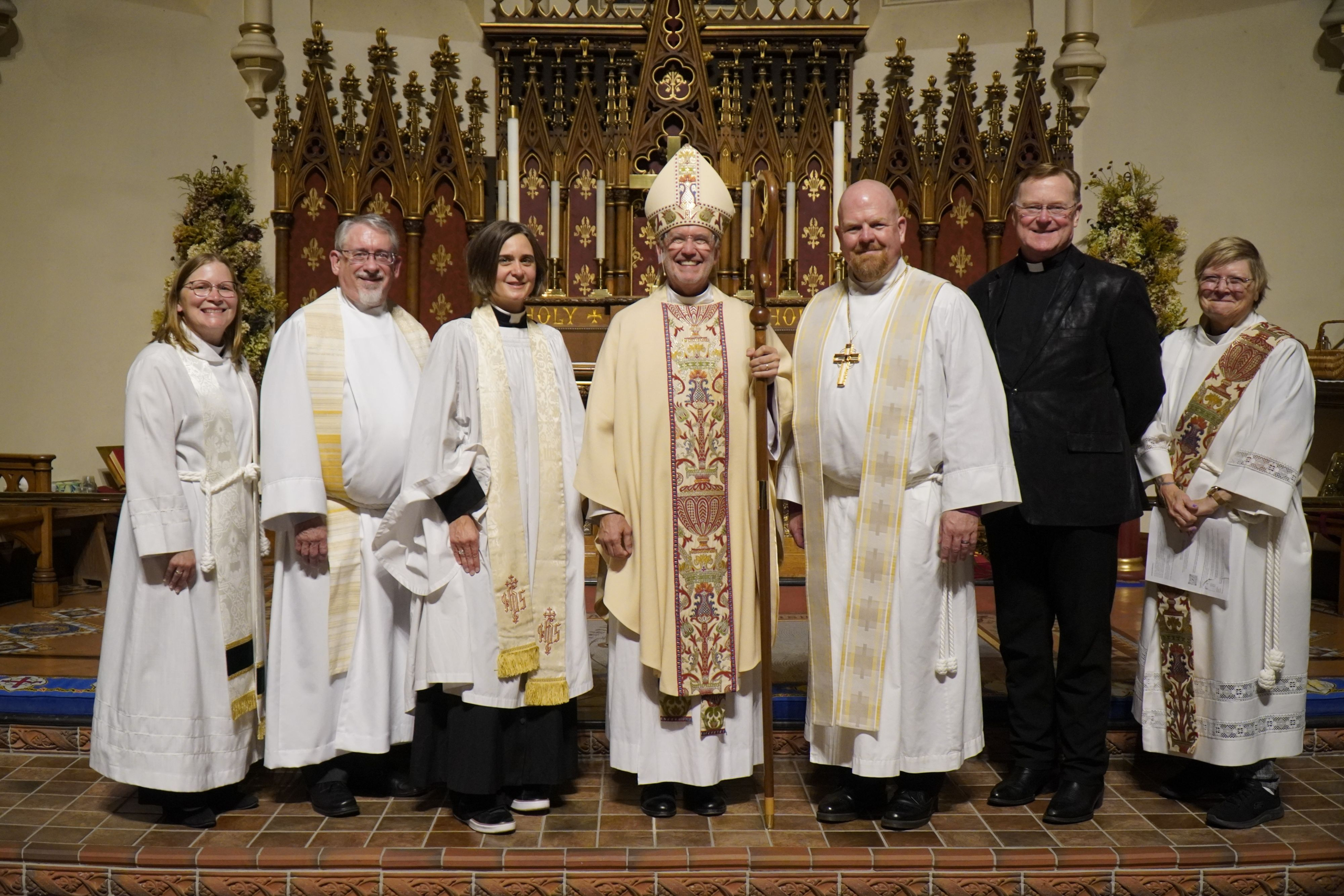
Pictured from right to left: Deacon Rebecca Smith, Fr. Steven Boes, Bishop Scott Johnson, Bishop Scott Barker, Canon Liz Easton, Rev. Stephen Griffith and Mother Kaity Reece.
On Friday, October 10 at 7:00 PM, the Episcopal Diocese of Nebraska and Balancing the Scales of Justice held an ecumenical Eucharist at Trinity Episcopal Cathedral in honor of the 24th Annual World Day Against the Death Penalty. World Day Against the Death Penalty is celebrated each year on October 10 to support the call for the end of capital punishment.
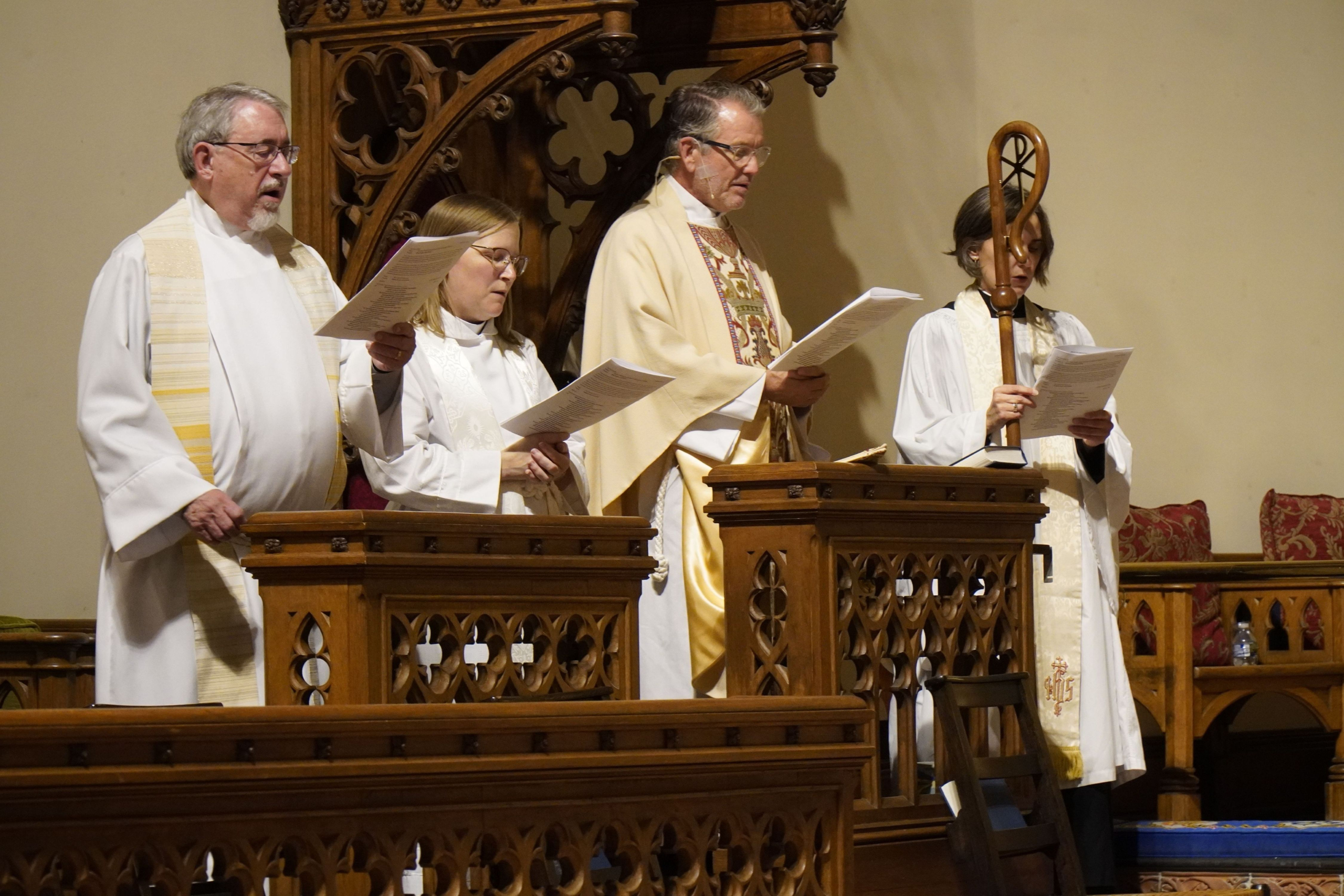
Bishop J. Scott Barker of the Episcopal Diocese of Nebraska presided at the World Day Against the Death Penalty Eucharist, while Rev. Stephen Griffith, former executive director of Nebraskans for Alternatives to the Death Penalty and United Methodist Church minister, served as preacher. In addition, Bishop Scott Johnson, Bishop of the Nebraska Synod of the Evangelical Lutheran Church of America, served as a liturgical minister for the Eucharist. A priest from the Archdiocese of Omaha also participated in the ecumenical service.
 Led by Barker, the Episcopal Diocese of Nebraska includes 52 communities stretching from Omaha to Scottsbluff. Balancing the Scales of Justice is a ministry of the Episcopal Diocese of Nebraska focused on developing faithful witnesses to criminal justice reform through prayer, formation opportunities, and workshops.
Balancing the Scales began six years ago with a six-hour prayer vigil and Eucharist focused on death penalty abolition on World Day Against the Death Penalty on October 10, 2019. A small group of Episcopalians, lay people, ordained clergy, and a monk, gathered at Grace Church in Tecumseh, Nebraska on October 10, 2019. Tecumseh, population 1,677, is home to Nebraska’s death row.
“As disciples of Christ, we gather to pray for a conversion of hearts and minds and an end to capital punishment in Nebraska” Barker said. “Our conviction rests in our knowledge that every human being – even those who commit heinous crimes and are deserving of serious punishment – is created in God’s image and so has an inherent dignity that can never be compromised, ignored, or erased.”
“Our human impulse is to strike out for revenge and retribution,” said Griffith. “But God calls us as Christians to a higher way – a way that does not repay evil with evil or murder with murder, and instead seeks transformation and healing for all.”
Johnson said: “The ELCA has publicly opposed the death penalty for over 30 years. We believe the injustice inherent within the practices related to capital punishment undermines any possible moral message we might want to ‘send.’ Biases, prejudices, and chance affect whom we charge with a capital crime, what verdict we reach, and whether appeals will be successful. State-sponsored violence against people created in the image of God fails to make society better or safer.”
In 2015, Nebraska became the first Republican-led state to abolish the death penalty in thirty years. This abolition was short-lived; however, after voters repealed the abolition in 2016. There are currently eleven men on Nebraska’s death row. Nebraska last executed someone on death row in 2019.